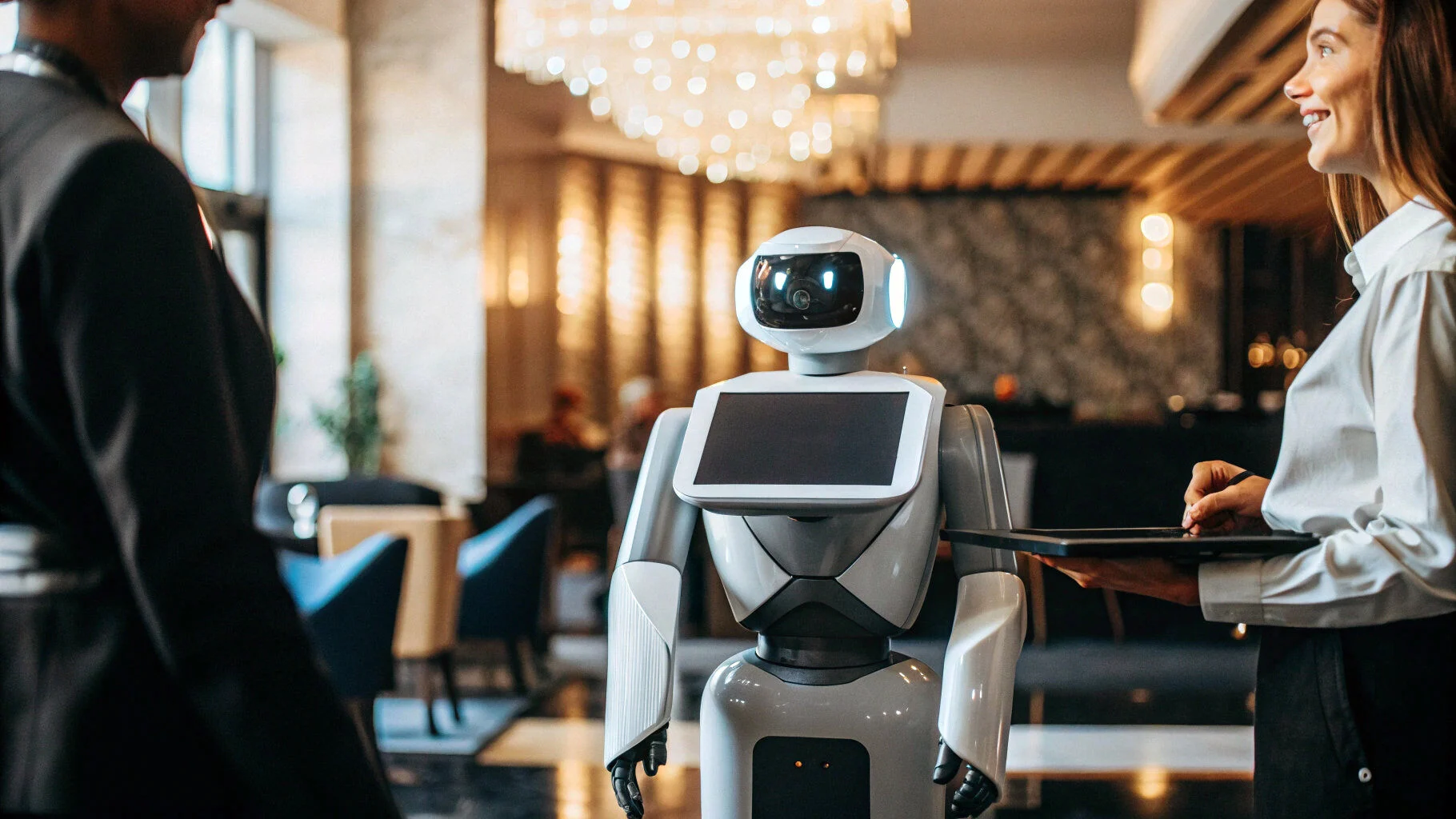
AI and automation are fundamentally reshaping hotel operations across every department, delivering significant improvements in efficiency, guest satisfaction, and revenue generation. The transformation spans from front-office guest interactions to behind-the-scenes operational management, supported by technological breakthroughs in machine learning, natural language processing, and IoT integration.
Guest Experience and Check-in Transformation
The most visible change is the modernization of guest check-in and personalization. Hotels now implement AI-powered smart check-ins that dramatically reduce front desk friction. AI systems can process room assignments automatically based on guest preferences, loyalty status, room maintenance schedules, and even weather patterns, reducing front desk workload by up to 60% while eliminating guest wait times. Mobile check-ins, facial recognition technology, and self-service kiosks enable touchless entry through digital room keys.
Beyond check-in, AI-driven personalization engines analyze guest data to tailor the entire stay. These systems track past visit preferences, booking patterns, and behavioral data to automatically adjust room settings such as lighting, temperature, and entertainment options before guests arrive. AI chatbots provide 24/7 guest support using natural language processing, handling routine inquiries, bookings, local recommendations, and special requests instantly while allowing human staff to focus on complex issues requiring empathy and judgment.
Operational Efficiency and Cost Reduction
Predictive analytics and scheduling represent one of the most impactful operational transformations. AI systems forecast demand by analyzing bookings, local events, historical data, and seasonal patterns, enabling hotels to adjust staffing levels proactively rather than reactively. The results are compelling: hotels using AI for operational scheduling report 40% reduction in coordination time, 25% improvement in room availability, and 18% decrease in guest complaints related to service delays.
Housekeeping automation optimizes one of the most labor-intensive operations. AI systems regulate cleaning schedules based on real-time room occupancy, assigning tasks only as rooms are vacated rather than on fixed schedules. This approach reduces unnecessary cleaning, maximizes workforce productivity, and minimizes guest disturbances. Hotels can process up to 300% more reservation transactions per hour through AI automation than manual systems, while reducing emergency repair costs by up to 60% through predictive maintenance.
Automated inventory and maintenance management uses IoT sensors to monitor equipment performance and supply levels continuously. These systems generate automated work orders before equipment failures occur and trigger supply reorders based on usage patterns rather than arbitrary schedules, eliminating stockouts and reducing unexpected downtime.
Smart energy management adjusts HVAC and lighting systems according to current occupancy levels, reducing utility bills by 18% without compromising guest comfort. Dynamic pricing algorithms analyze market conditions, competitor rates, demand patterns, and historical data to optimize room rates in real time, maximizing profitability during peak periods while attracting price-sensitive customers during slower times.
Revenue Generation and Guest Targeting
AI-powered dynamic pricing systems work around the clock to analyze supply, demand, and competition, adjusting rates automatically to maximize revenue and maintain profitability even during market fluctuations. Hotels implementing these systems report 20% improvement in RevPAR (revenue per available room).
Intelligent upselling and personalization increase ancillary revenue by 25% on average. AI systems identify which guests are most likely to purchase specific amenities or services based on their profiles and booking history, while targeted marketing campaigns use behavioral insights to reach the right guests at the right time. Direct booking revenue increases 15-25% through these personalized strategies combined with dynamic pricing.
Demand forecasting capabilities enable hotels to align marketing efforts, resource allocation, and pricing in advance, ensuring optimal occupancy during both peak and low seasons.
Guest Satisfaction and Service Quality
Hotels implementing AI solutions report 20-40% improvements in guest satisfaction within 90 days of deployment, driven by faster response times, personalized service, and proactive issue resolution. AI systems analyze guest feedback across multiple channels, detecting sentiment, patterns, and themes to identify improvement opportunities automatically. Real-time feedback alerts enable staff to resolve issues while guests are still at the hotel, preventing negative reviews.
Hotels using AI-assisted human service models achieve average satisfaction ratings of 4.7/5.0 compared to 4.2/5.0 for traditional manual services, while simultaneously improving operational efficiency by 65% and increasing revenue by 25%.
Financial Impact and Cost Savings
The financial case for automation is compelling. Approximately 93% of hoteliers report notable enhancements in efficiency following technology adoption, with 58% of guests enjoying AI-powered bookings. Smart room systems reduce utility costs by 18%, conversational chatbots reduce response times by 75% within 30-60 days, and automated upselling increases ancillary revenue by 25% in 30-45 days.
Automation reduces costs associated with human error, such as refunds for incorrect reservations or billing mistakes, while automated compliance monitoring helps hotels simplify regulatory documentation and avoid fines.
Workforce Impact and Staffing Evolution
The technology shift is reshaping hotel employment fundamentally. According to industry projections, by 2030, hotels will operate with human staffs at least 50% lower than 2019 levels on average, with variation by property type: 75% reduction in budget/economy hotels, 50% in full-service properties, and 25% at luxury properties. Some studies project up to 25% of all hospitality jobs will be displaced by automation, with back-of-house positions and roles in accounting, revenue management, sales, and basic concierge services most heavily impacted.
However, forward-thinking adoption approaches demonstrate that automation can enhance rather than replace human workers. AI-human collaboration models position AI as a co-pilot that enhances employee capabilities in roles requiring empathy, creativity, and complex problem-solving. Training programs focusing on AI collaboration rather than replacement create more confident teams who interpret AI recommendations, override automated systems when needed, and use data insights to anticipate guest needs proactively. This approach transforms routine interactions into opportunities for memorable experiences while making work more intellectually engaging for employees.
Real-World Implementation
Major hotel chains are already demonstrating these capabilities at scale. Marriott uses AI-powered chatbots and data analytics for personalized guest offers, increasing loyalty and direct bookings. Hilton integrates robotic concierges and smart room technology with AI-powered customer service. Accor leverages AI-driven revenue management and predictive maintenance across properties. Companies like Aiosell, Visito, and Myma.ai provide AI platforms that automate revenue management, guest communications, and operational workflows across multiple hotel systems.
Future Direction
The hospitality industry is moving toward increasingly integrated AI-IoT ecosystems. Voice-activated room controls powered by AI assistants enable seamless interaction with hotel amenities, while emerging technologies like robot chefs, automated luggage handling, and self-driving shuttles are expanding operational automation. Fully automated concierge and reception services are already transforming guest interactions, with virtual assistants and automated kiosks reducing wait times and improving satisfaction.
The key insight across all implementations is that successful automation combines technology with thoughtful workforce management. Hotels that frame AI as a tool for liberation—freeing staff from repetitive tasks to focus on creating memorable experiences—achieve both operational efficiency and strong employee engagement.